
We provide telecom infrastructure solutions tailored to the unique demands of each industry — from extreme outdoor environments to high-density data halls.
Outdoor IP55 cabinets for macro and small cell sites, pre-integrated with DC power distribution (-48 V / +24 V) and thermal management rated from 300 W fan-filter to 8 kW compressor units. Supporting carriers deploying sub-6 GHz (698-3800 MHz) and mmWave (24-40 GHz) infrastructure, with NEBS Level 3 seismic compliance for tower-mounted applications.
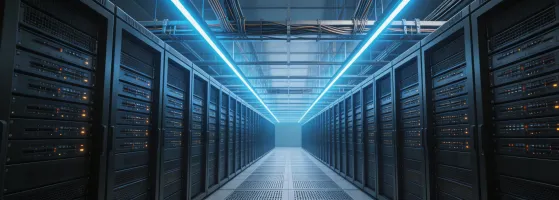
Open-frame and enclosed server racks from 12U to 47U (600 mm and 800 mm widths, 1000/1100/1200 mm depths), with integrated vertical cable managers, PDU mounting rails rated up to 30 A / 208 V, and hot/cold aisle containment accessories. Static load capacity up to 1,500 kg per rack. Designed for colocation, enterprise, and edge data center environments.
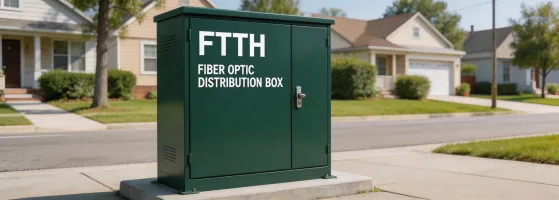
Street cabinets, fiber distribution terminals, and splice closures for last-mile GPON and XGS-PON networks. Our distribution boxes support up to 288 fiber cores with SC/APC and LC/APC pre-connectorized options, achieving insertion loss below 0.3 dB and return loss above 55 dB. Compatible with 1:32 and 1:64 PLC splitter modules for FTTH deployments.
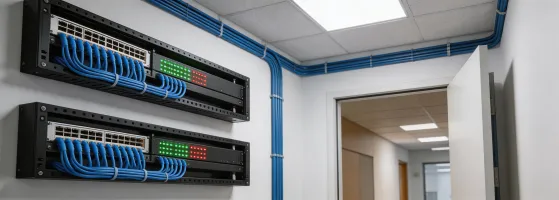
Wall-mount and floor-standing network cabinets, structured cabling panels, and cable management for office buildings, campuses, and retail chains. Quiet-rated options for shared office environments.

Compact roadside cabinets, smart pole enclosures, and multi-purpose housings for IoT gateways, traffic sensors, and edge computing nodes. Vandal-resistant and weatherproof designs for public installations.
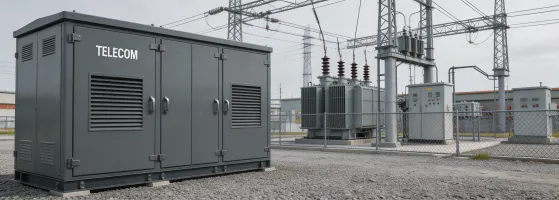
Ruggedized enclosures for SCADA equipment, substation communications, and remote monitoring. Built to withstand extreme temperature swings, dust, and vibration with EMC shielding options.
Every deployment environment imposes constraints. Understanding these upfront saves time and cost.
Our standard outdoor cabinets operate within -40 °C to +55 °C ambient range. Deployments at altitudes above 2,000 meters require de-rated cooling capacity calculations — air density drops roughly 12% per 1,000 m, reducing heat exchanger efficiency. For high-altitude sites (e.g., mountain-top repeaters), active air conditioning units are recommended over passive cooling, increasing both cost and power consumption.
NEBS Level 3 compliant cabinets (per GR-63-CORE Zone 4) withstand seismic events up to 2.0g horizontal acceleration. However, floor-standing units taller than 2,100 mm in Zone 4 areas require supplemental wall bracing or overhead strut kits — the standard base anchoring alone does not meet the overturning moment threshold. Wind load resistance is rated for 150 mph (Category 4) on enclosed models; open-frame racks are not suitable for exposed outdoor mounting.
Standard powder-coated steel cabinets carry a 10-year corrosion warranty in typical inland environments. For installations within 500 meters of saltwater — ports, offshore platforms, coastal cell sites — we recommend marine-grade 316L stainless steel or aluminum alloy enclosures, which add 30-40% to material cost. Galvanized steel is not sufficient for direct salt spray exposure.
Active cooling (compressor-based AC units) handles heat loads up to 8 kW but draws 500-2,000 W of continuous power — a significant consideration for off-grid or solar-powered remote sites. For sites with heat loads below 800 W and ambient temperatures under 40 °C, fan-filter units (drawing 30-80 W) are more practical, though they cannot cool below ambient and do not filter humidity.
Our application engineers can recommend the right enclosure family based on your deployment environment and equipment requirements.